
Powered By



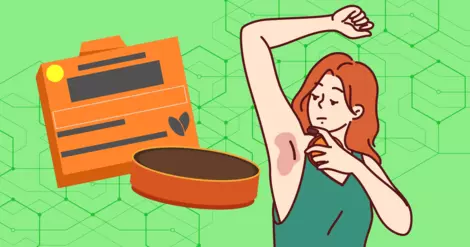
It may be tempting to pop, squeeze, or pick at painful hidradenitis suppurativa (HS) cysts. However, popping even everyday pimples is discouraged by the American Academy of Dermatology. Doing so can damage or scar the skin, worsen HS flare-ups, and increase the risk of bacterial infection.
Some members of myHSteam find that following that urge to do it yourself makes things worse. “I squeezed a boil, and now all of a sudden, it got huge and hard,” wrote one member.
Popping HS cysts can also be intensely painful if you do it at home without an anesthetic. “Popping is so painful, and I can only suffer so much before I can’t take it anymore,” said another myHSteam member.
In addition to these risks, it can be difficult to reach HS cysts in the armpits and groin area.
Know when to get help from qualified healthcare professionals for your HS symptoms. There are several procedures that a certified dermatologist can perform. In this article, we discuss those treatment options and safe at-home remedies that can help ease HS symptoms.
Attempting to pop an HS cyst can cause several problems. The most serious is an infection. Since HS cysts are deep under your skin, infections could spread to other areas of skin.
Trying to pop an HS cyst could also push it deeper into your skin and cause more inflammation. Aggravating a cyst may also cause scarring or changes to the color of your skin in the affected area. This type of scarring and discoloration could be permanent.

The most effective way to manage the skin condition and treat cysts is to diagnose and treat HS early. It’s important to see a dermatologist if you begin to experience any of the following symptoms with your HS lesions:
Instead of picking at or popping your HS cysts, consult your healthcare provider or dermatologist for treatment. There’s no cure for HS, but many treatments are available to prevent new lesions from forming and to manage the symptoms of current lesions. Your dermatologist can evaluate your HS cysts and determine the best way to treat them — either with medication, steroid injections, incision and drainage, or surgical procedures for more severe cases.
Your dermatologist may prescribe you one or more of the following medications for HS cysts and other symptoms:
Sometimes, healthcare providers may also prescribe oral retinoid medications, especially if other options aren’t working. Retinoid medications change how your skin cells operate, but aren’t usually the first option for treating HS.
Your dermatologist may also perform procedures to treat HS cysts and other HS lesions. To reduce swelling and inflammation, your doctor may treat you with steroid injections. These injections can also help with pain management.
Incision and drainage is another option for short-term pain relief. For this procedure, your doctor makes a small incision in the cyst, allowing the pus to drain. This isn’t as effective as some other options because cysts treated this way tend to return.
It’s important to note that incision and drainage and steroid injections typically provide only short-term pain relief. “I had a really deep cyst in my buttock/perianal area. My dermatologist made an incision and drained the cyst, but it’s taking months to heal,” said a myHSteam member.
Other procedures, including surgical interventions, might be necessary for severe HS or long-term treatment. These include:
Members of myHSteam have shared their experiences with these procedures done by a dermatologist.
Your treatment plan may change over time depending on the severity and frequency of your HS symptoms. It’s important to continue seeing your dermatologist to keep your HS well managed in the long term, even if your HS symptoms improve.
You might be able to treat mild HS cysts at home. Following a daily skin care routine can be very beneficial for managing HS abscesses. To help ease or prevent flare-ups, you might want to:
Some people with HS recommend over-the-counter topical antibiotics to help treat symptoms at home. However, these may cause allergic reactions and a skin reaction known as contact dermatitis. Instead, wash your skin gently to keep it free from bacteria, and keep an eye on any open wounds.
Not everyone responds to treatments and home remedies in the same way. Each comes with risks and benefits. Speak to your doctor about the best remedies for your skin and how to care for your symptoms at home.
On myHSteam, people share their experiences with hidradenitis suppurativa, get advice, and find support from others who understand.
How do you avoid picking at or popping your HS cysts? Let others know in the comments below.
Get updates directly to your inbox.


Infectious to others, like using bathtub?


 Continue with Facebook
Continue with Email
Continue with Facebook
Continue with Email
Continue with Facebook
Continue with Email
Continue with Facebook
Continue with Email
Become a member to get even more





 Join
Join



 Your Privacy Choices

This is a member-feature!
Sign up for free to view article comments.
I’ve had HS since I was 25 years old, although it was diagnosed as such. Half my sweat glads were removed on both sides of my thighs. I am now 68 years old. Throughout my life I had cysts/lesions most… read more
We'd love to hear from you! Please share your name and email to post and read comments.
You'll also get the latest articles directly to your inbox.