
Powered By


Members of myHSteam consistently seek ways to feel better. “How do y’all find relief and manage?” one member asked.
While there’s not yet a cure for hidradenitis suppurativa (HS), it’s possible to find relief or even go into remission (a period when HS symptoms subside) with the right HS treatment plan.
Many effective HS treatments are available, and some people are looking to glucagon-like peptide 1 receptor agonists (GLP-1 drugs) to help with their HS symptoms. These medications are prescribed to treat conditions such as diabetes and obesity. These drugs encourage weight loss, which is also associated with reduced HS symptoms, so some people are curious about their impact on HS.
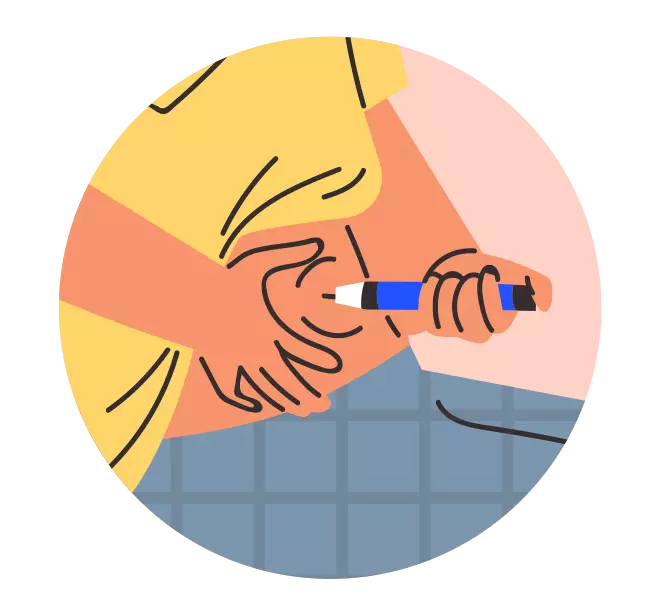 To better understand, we reached out to members of the myHSteam community. Members responded to share their experiences with GLP-1 drugs and whether using these medications affected their HS symptoms.
Read on to find out more about the myHSteam survey results.
Some members of myHSteam saw positive changes in their HS symptoms while taking GLP-1s. Common GLP-1 medications include:
Members said they’d been prescribed the drugs for diabetes and obesity but not for HS. They were asked whether they’d noticed any symptom changes after starting a GLP-1.
Only a small sample of the 49,000-member myHSteam community shared their GLP-1 experiences, but the results may be interesting to others with HS.
Seventeen members (63 percent of respondents) said their GLP-1 medication helped or reduced their HS symptoms.
The myHSteam members who replied to the survey shared a range of responses about their GLP-1 experiences.
Some members have noticed major improvements:

Others lost weight or improved their diabetes control but didn’t see a change in HS:
GLP-1s are relatively new, so healthcare professionals are still learning how they affect HS. The available research shows promising results.
One small study looked at 30 people with HS who were using semaglutide for obesity, in addition to being on an HS treatment. The researchers found participants were symptom-free for longer periods than they’d been before starting GLP-1s. In fact, their HS flares occurred every 12 weeks while on semaglutide, compared to a flare every 8.5 weeks before starting the drug. Participants also reported a better quality of life.
Other researchers conducted a survey of 22 people with HS who were prescribed one of four GLP-1 drugs for diabetes or obesity. About 68 percent of participants said their HS improved, with 62 percent experiencing fewer flares and 67 percent seeing fewer new HS lesions form while on GLP-1s. Many participants also saw improvements in pain, drainage, itch, odor, and impact on daily activities.
These outcomes may be linked to the fact that GLP-1 drugs aim to help manage diabetes and obesity. Obesity is a risk factor for developing HS, and diabetes is more common among people with HS than it is in the general population. More studies are needed to determine whether GLP-1s may help control HS symptoms in people without diabetes or obesity.
Learning how GLP-1s have affected myHSteam members may be helpful if you’re thinking about trying one of these drugs. Only you and your doctor can determine if these medications are right for you. Speak with your dermatologist or another healthcare provider about whether to consider adding a GLP-1 drug to your HS treatment plan.
On myHSteam, people share their experiences with hidradenitis suppurativa, get advice, and find support from others who understand.
Have your HS symptoms improved after starting a GLP-1 drug? Let others know in the comments below.
Get updates directly to your inbox.




 Continue with Facebook
Continue with Email
Continue with Facebook
Continue with Email
Continue with Facebook
Continue with Email
Continue with Facebook
Continue with Email
Become a member to get even more





 Join
Join




 Your Privacy Choices

This is a member-feature!
Sign up for free to view article comments.
I have been on wegovy low dose for 3 months (doc recommended to help with h S,)so far it has helped,no flares and scars are gone also,I hope this continues,but with h S one never knows
We'd love to hear from you! Please share your name and email to post and read comments.
You'll also get the latest articles directly to your inbox.