
Powered By



If you’re living with the symptoms of hidradenitis suppurativa (HS), you know that not all HS lesions look or feel the same. Some take longer than others to drain, and the fluid can look different from one lesion to the next.
“Does anyone have boils that fill up with blood rather than pus?” one member of myHSteam asked. “I am finding a repeating pattern of having boils that go large and firm with pus and then go down and fill with blood. They don’t ever burst, but the skin is very thin and very painful.”
In this article, we’ll explain why some HS lesions might fill with blood, how to care for draining wounds, and when to talk with your doctor about what you’re experiencing.
Sign up to view the results!
 Continue with Facebook
Continue with Email
Continue with Facebook
Continue with Email
Hidradenitis suppurativa is a chronic (long-term) skin condition that causes inflammation around hair follicles, leading to painful boils, nodules, cysts, or bumps. Symptoms usually show up in areas of the body where skin touches skin — like under the breasts, the groin area, inner thighs, buttocks, and armpits.
Boils in HS can range from the size of a pea to a large, painful, oozing abscess (a swollen, pus-filled lump).
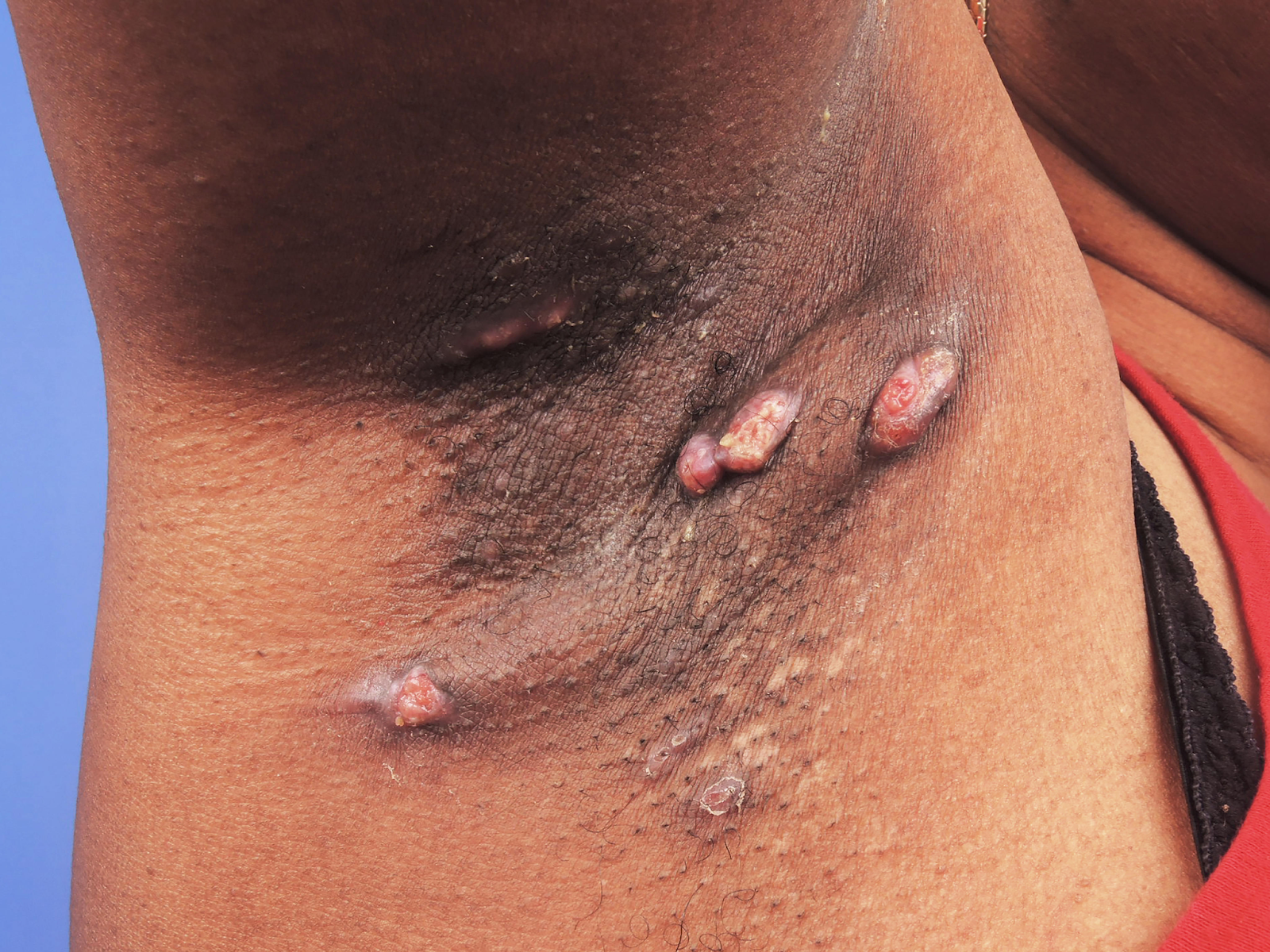
It’s common for HS boils to fill with pus, a thick yellow or greenish fluid. Pus forms when the immune system sends white blood cells to fight bacteria. This leads to a buildup of immune cells, bacteria, and dead tissue.
Some people notice drainage that looks pink, red, or more like blood than pus. Large abscesses or infected lesions often contain a combination of blood and pus.
Many myHSteam members report developing HS lesions containing blood. “I do have boils that are full of blood. Most of them are. Very seldom do I get one with both blood and pus,” one member said.

Another shared that every lesion is different: “Sometimes it’s pus, sometimes blood, sometimes sebaceous, sometimes solid.”
Some say that bleeding depends on the affected part of the body: “Mine in the groin and butt area swell, burst, and bleed a lot.”
Others say that their skin bleeds for a while after a lesion has broken open: “I had one that burst yesterday, and it bled for eight hours straight!”
The color and consistency of fluid may vary from person to person and from flare-up to flare-up. Seeing blood in an intact boil or bleeding after a lesion has broken open can be concerning. It’s important to understand how this symptom occurs and what to do about it.
Blood-filled lesions may develop for various reasons, including:
Managing boil drainage from HS lesions is an integral part of self-care. Follow the treatment plan provided by your healthcare provider. To manage the drainage of an HS boil, especially if it’s filled with blood or actively bleeding, try these general tips:
A blood-filled HS lesion that stops bleeding quickly may not be a medical emergency, especially if it only happens occasionally. However, because of the risk of blood loss or infection, it’s important to know the signs that mean you should seek prompt medical attention. Contact your doctor if you notice any of the following:
Treatment options for infected and painful lumps include:
HS boils and lesions can be painful, persistent, and affect your quality of life — but there are ways to manage them. Talk to your doctor about tips for wound care and what warning signs to watch for.
Some HS risk factors, such as family history, can’t be changed — but your doctor may help you find lifestyle or environmental triggers that can be addressed to reduce the severity or frequency of flares.
On myHSteam, people share their experiences with hidradenitis suppurativa, get advice, and find support from others who understand.
Have you ever had an HS lesion fill up with blood? Let others know in the comments below.

Still have questions about your condition? I can help.
Get updates directly to your inbox.


I get boils close to where I urinate and it hurts so bad. I also get bad uti's and infection in my cervix , is this normal?


 Continue with Facebook
Continue with Email
Continue with Facebook
Continue with Email
Continue with Facebook
Continue with Email
Continue with Facebook
Continue with Email
Become a member to get even more





 Join
Join



 Your Privacy Choices

This is a member-feature!
Sign up for free to view article comments.
i recently had one that bled a lot out of no where located on my buttocks while my husband was tending to my flare up and it scared him. It didnt bleed too long but it bled a lot. I am glad i read… read more
We'd love to hear from you! Please share your name and email to post and read comments.
You'll also get the latest articles directly to your inbox.