
Powered By



A sore or itchy bump under your breast can be hard to ignore, especially when your bra keeps rubbing against it. Bumps that look like pimples under your breasts aren’t always acne, so choosing the right treatment starts with considering what the skin looks and feels like.
Some bumps improve with at-home remedies, while others need prescription medication under a doctor’s care. This article will explain six possible causes of bumps under your breasts, how to find relief, and when to have them checked.
Skin changes under the breasts can be caused by acne, folliculitis, heat rash, intertrigo, fungal infection, or hidradenitis suppurativa (HS).
Small whiteheads, blackheads, or raised pimples may point to acne. Pores can become clogged with oil and dead skin cells.
Bacteria can contribute to inflamed breakouts. Sweat and friction from a bra can also trigger a type of breakout called acne mechanica.
For mild bumps on skin that isn’t raw or broken, try an over-the-counter (OTC) product with salicylic acid, which helps clear clogged pores. Benzoyl peroxide can help with inflamed pimples. Start cautiously with a lower strength, follow the label, and stop if it causes strong burning or irritation.
Wash skin after sweating and avoid greasy products that clog pores. Don’t pop the bumps.
Acne treatments need time to work, so you may not see a clear difference for four to eight weeks. If you have deep or painful acne, or breakouts that don’t improve, talk to a dermatologist.
A cluster of small, itchy or tender bumps, sometimes with white, pus-filled tips, could be folliculitis. This means the hair follicles, the tiny openings where hairs grow, are inflamed. Bacteria are a common cause, but yeast and irritation can also play a role.
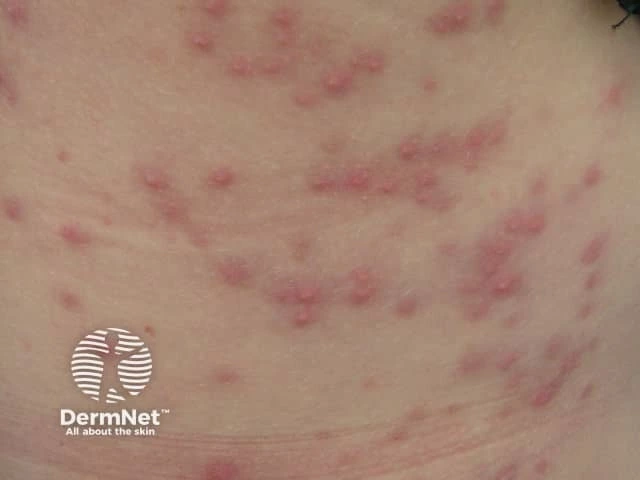
Folliculitis, caused by inflamed hair follicles, can appear as a cluster of small, red or pink bumps on light skin. (CC BY-NC-ND 4.0/DermNet)
Under the breasts, trapped sweat and friction from clothing may damage follicles, making them more likely to become inflamed. The bumps often appear around individual hairs and may look like acne.
For mild folliculitis, hold a clean, warm, damp washcloth against the bumps several times a day. Gently wash the area and keep towels clean. Use a fresh, clean washcloth and towel every time, and avoid sharing them with anyone else.
A benzoyl peroxide wash may help in some cases of bacterial folliculitis, but it can sting if the skin is broken and may bleach clothing or towels.
Bumps that spread, keep returning, or don’t improve after a week or two may need a prescription antibiotic or antifungal treatment, depending on the cause.
Heat rash often looks like groups of tiny, clear blisters or small red or inflamed bumps. It may itch, tingle, or feel prickly. Bumps may be easier to feel than see, so pay attention to texture and discomfort.
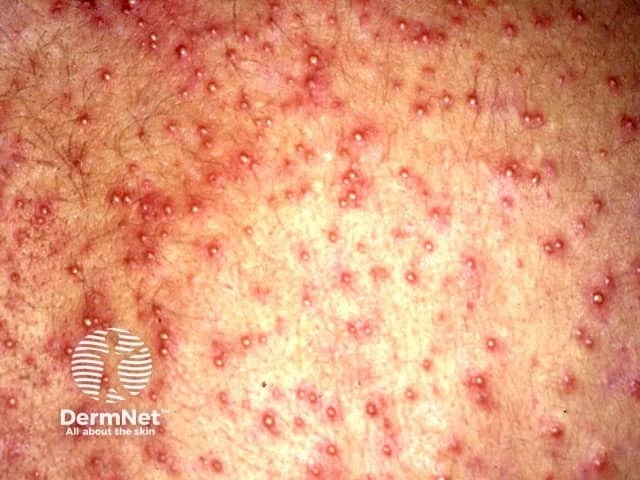
A heat rash involves numerous small, red bumps and blisters. (CC BY-NC-ND 4.0/DermNet)
Heat rash happens when sweat can’t escape through its usual ducts and becomes trapped beneath the skin. The fold under the breasts is especially prone to this because it’s warm, moist, and often covered by a bra.
The main treatment is to cool the skin. Move somewhere cooler, loosen tight clothing, and try a cool shower or damp washcloth.
Let the area air-dry when possible. Avoid heavy, oily creams that could block sweat ducts.
Mild heat rash often clears once the skin cools. See a doctor if the bumps worsen or don’t improve after a few days.
A broad, sore patch under your breast may be intertrigo. This common skin irritation develops when two skin surfaces rub together in a warm, damp fold. The skin may look pink, red, reddish-brown, or darker than usual, and it can sting, itch, crack, or peel.
Intertrigo doesn’t always involve an infection. Keeping the fold clean, dry, and cool may be enough to calm early irritation.
After washing or physical activity, pat the area dry carefully. A fan or hair dryer set to cool can help dry hard-to-reach spots.
If the skin is intact and the rash appears related to rubbing, a thin layer of zinc oxide or plain petroleum jelly may help protect it. A clean, soft piece of moisture-absorbing fabric between the skin surfaces can also reduce contact. Change the fabric if it gets damp.
A rash that oozes, has an unpleasant odor, or gets worse may have developed an infection and needs medical assessment. However, odor alone does not confirm an infection.
Sometimes intertrigo develops a fungal infection. One common cause is Candida, a yeast that grows well in warm skin folds.
Unlike isolated acne spots, a yeast rash often forms an itchy, bright or deep red, moist patch, sometimes with tiny bumps or pus-filled spots just beyond its edges. Tight clothing, excessive sweating, obesity, diabetes, or a weakened immune system can make these infections more likely.

A red, inflamed rash characteristic of intertrigo under the breast. (CC BY-NC-ND 4.0/DermNet)
For a rash that seems fungal, an OTC antifungal cream containing clotrimazole may help. Use it exactly as the package directs, and keep the fold as cool and dry as possible. Regular acne treatments won’t clear a yeast infection and may increase irritation.
Because other rashes can look similar, ask a doctor or pharmacist if you’re unsure what you’re treating. Get checked if the rash is spreading, keeps coming back, or doesn’t improve with treatment.
A painful lump that forms deep under the skin, drains, heals, and then returns may be a sign of HS. It’s a long-term inflammatory skin condition that affects hair follicles. HS can occur where skin rubs together, including under the breasts.
HS bumps can resemble boils or acne cysts. Some release fluid or pus, and repeated flare-ups may leave scars or tunnels beneath the skin. Unlike an ordinary pimple, an HS lump may return in the same spot or nearby, even after standard acne or infection treatments.

HS bumps and scarring are common under the breast. (CC BY-NC-ND 4.0/DermNet)
For at-home HS relief, place a clean, warm compress on a tender lump for about 10 minutes. Wear clothing that doesn’t rub, clean the skin gently, and never squeeze or try to drain the bump yourself. These steps may ease discomfort but won’t replace medical treatment.
Ask a dermatologist about HS if deep, painful bumps recur. A dermatologist can check the pattern and discuss treatments, including prescription medicines, to help control flare-ups.
If bumps don’t improve with home care, make an appointment with your doctor or a dermatologist. See a doctor if you notice:
Seek prompt medical care for fever, chills, quickly spreading redness or discoloration, or rapidly increasing pain. A new lump that feels deeper in the breast, skin dimpling, nipple changes, or unusual nipple discharge also needs a medical evaluation. Most breast lumps aren’t cancer, but it’s important not to assume a persistent lump is just a pimple.
A doctor will usually ask when the bumps started, whether they recur, and what you’ve tried, then examine the skin. Sometimes a swab, skin scraping, or other test helps identify an infection.
You can also show photos of flare-ups that have faded. Getting the right diagnosis can help you find a treatment that works for your skin.
Get updates directly to your inbox.




 Continue with Facebook
Continue with Email
Continue with Facebook
Continue with Email
Become a member to get even more





 Join

 Your Privacy Choices

This is a member-feature!
Sign up for free to view article comments.
We'd love to hear from you! Please share your name and email to post and read comments.
You'll also get the latest articles directly to your inbox.