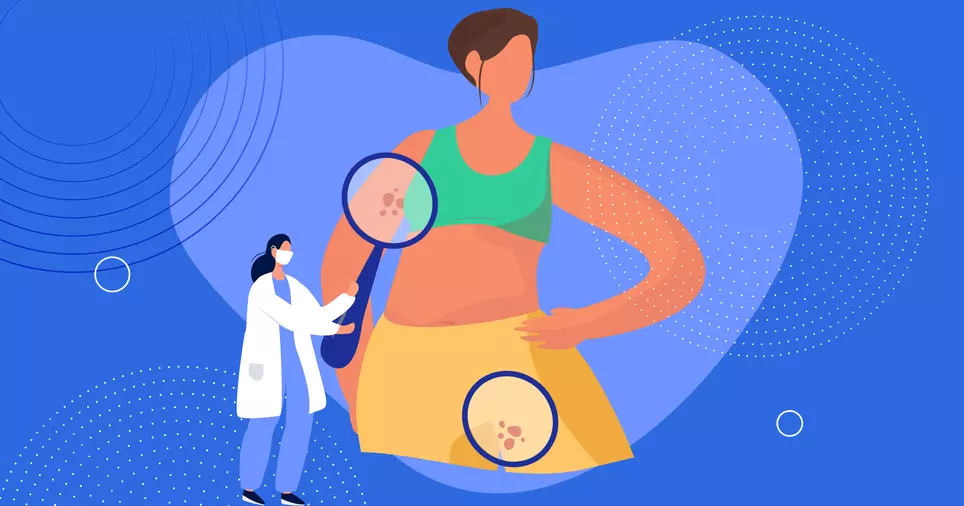
HS commonly affects areas where skin rubs together or where there are hair follicles and sweat glands. In young adults, the most frequently affected areas include the inner thighs, armpits, buttocks, and under the breasts. Symptoms can vary in severity depending on the stage of HS.
Here are common symptoms to watch for Show Full Answer
HS commonly affects areas where skin rubs together or where there are hair follicles and sweat glands. In young adults, the most frequently affected areas include the inner thighs, armpits, buttocks, and under the breasts. Symptoms can vary in severity depending on the stage of HS.
Here are common symptoms to watch for across these areas:
- Early signs: Itching, burning, or soreness 12–48 hours before a lesion appears
- Blackheads: Often appearing in clusters or in a double-headed pattern
- Bumps or nodules: Deep, pea-sized lumps similar to acne cysts or boils
- Abscesses: Painful, pus-filled lumps that may burst and release foul-smelling discharge
- Tunnels (sinus tracts): Channels that form under the skin connecting lesions in more advanced stages
- Scarring: Can develop over time, and in severe cases may restrict movement
The Hurley staging system describes HS severity:
1. Stage 1 – One or more lesions, no tunneling or scarring
2. Stage 2 – Lesions with some tunneling and scarring
3. Stage 3 – Multiple lesions across larger areas with widespread tunneling and scarring Several factors can trigger or worsen flares, including:
- Smoking
- Hormonal changes
- Stress
- Sweating
- Weight gain
- Family history of HS
HS can also take a real toll on mental health. Many people living with HS report feelings of depression, anxiety, and challenges with self-esteem. As one myHSteam member shared, "I'm having several flare-ups today, and I'm just extremely depressed — whenever this happens, all I do is sleep."
It's really important to work closely with a dermatologist or healthcare provider to find a treatment plan that works for you. While there's no cure, there are many options available to help manage symptoms and reduce flares.
June 18








 Join
Join




 Your Privacy Choices